Road to SummerSlam: The Physical Reality Behind the Summer Push Nobody Talks About
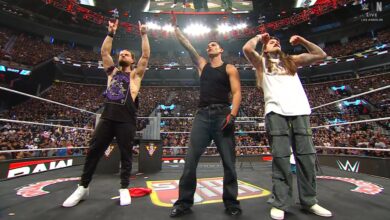
Roman Reigns and Seth Rollins signed their contract on Raw tonight, and the road to SummerSlam in Minneapolis is now officially set. Between now and August 1, both men will work house show loops, television tapings, and whatever promotional obligations WWE places in front of the World Heavyweight Championship feud being built for the biggest summer event of the year. Add in the CM Punk and Cody Rhodes heat that the creative team is trying to establish, the continued work from AEW’s roster building toward Redemption in Montreal, and the week-to-week live events that keep the touring machine running, and you have the compressed summer schedule that makes July and early August among the most physically demanding stretches in the professional wrestling calendar.
The story being built for SummerSlam is compelling. The performers delivering it are athletes managing a physical workload that most observers underestimate precisely because the art of the business is making it look effortless. The contract signing that happened on Raw tonight is the visible part of the work. The less visible part is what Reigns, Rollins, Punk, Rhodes, and every other performer on the summer roster needs to do between now and August 2 to arrive at SummerSlam in physical condition that allows them to deliver what the moment demands.
What the Summer Schedule Actually Looks Like
The period between the start of July and SummerSlam is one of the densest in the WWE calendar. Saturday Night’s Main Event in New York on July 18, SummerSlam across two nights on August 1 and 2 in Minneapolis, with house show loops and Raw and SmackDown tapings filling every week in between. For performers in marquee positions, this means performing at or near the highest level of the show three to five times per week across venues that range from intimate arenas to sold-out stadiums.
The physical profile of this schedule is specific in ways that conventional athlete preparation does not fully address. Each performance requires the kind of focused physical output that a sporting contest demands, with the added cognitive and creative load of executing character, selling storytelling, and managing the physical safety of the other performers in the match. The bump that looks seamless from the floor is the product of years of trained physical conditioning. The ability to take that bump at the same level in the fourth match of a house show loop as in the first requires physical preparation that sustains output across a context where the schedule never fully allows for complete recovery.
For performers like Reigns, whose physical peak condition is part of the character’s credibility, arriving at SummerSlam looking exactly as imposing as the build demanded requires nutritional and recovery discipline across every week between now and Minneapolis. High-quality beef protein consumed consistently in the post-show window, when muscle tissue damaged by a performance that involves genuine physical output is most receptive to repair, is the nutritional foundation that sustains the physical condition the character requires. A performer who misses this window after a house show on Friday is not in the same physical condition for a Raw taping on Monday that they would have been with deliberate recovery. Over five weeks of summer schedule, that difference accumulates visibly.
The McGregor Situation and What It Tells Us About Contact Sport Physical Peaks
Conor McGregor’s announcement of surgery this week, with a stated intention to return for the final fight on his UFC contract, is a reminder of what happens when elite athletic careers in contact sports reach the intersection of ambition and physical reality. McGregor returned to the octagon for the first time in five years recently, and whatever the outcome of the fight, the preparation demands of returning to elite competition after an extended absence are substantial regardless of the fighter’s historical peak.
The physical challenge of maintaining contact sport readiness through an extended period is different from the challenge of peaking for a single event. The connective tissue resilience, the cardiovascular base, and the neurological sharpness for high-speed reactive performance all degrade at rates that increase with age and inactivity. The fighter who returns from injury and inactivity and expects to arrive at their historical peak without the progressive rebuilding work that peak conditioning requires is operating on a flawed model of athletic performance, regardless of how elite that performance was at its best.
A study published in the International Journal of Sports Physiology and Performance examining recovery markers in combat sport athletes following extended breaks from high-intensity training found that the return to baseline performance metrics required substantially longer preparation periods for athletes with longer breaks, with protein intake adequacy during the return phase identified as the most modifiable variable associated with the speed of performance recovery. For any fighter returning from surgery and an extended layoff, the quality and consistency of nutritional recovery support during the rehabilitation phase determines how much of the pre-break physical capability is available by the time the octagon lights are on.
AEW’s Summer and the Physical Demands of Dual Competition
AEW Redemption in Montreal on July 27 adds another dimension to the summer schedule for the performers who move between the wrestling landscape’s overlapping event calendars. Mark Briscoe defending the TNT Championship, Will Ospreay building toward whatever the All In creative direction holds, and the roster filling a pay-per-view card between now and the end of July represents a meaningful physical demand on top of whatever crossover and independent work fills the gaps.
The performers who work most frequently across multiple promotions and independent dates face a specific version of the recovery challenge that single-promotion talent does not: no central organisation managing their physical load, inconsistent access to recovery facilities between bookings, and the logistical demands of travel across multiple markets on a schedule that does not account for the recovery requirements of the previous booking. The performers who sustain this kind of schedule at a high level year over year are invariably the ones with the most deliberate personal recovery systems.
Heat therapy used consistently on the recovery days between bookings addresses the accumulated soft tissue tension that a multi-promotion schedule deposits in the neck, shoulder, and back musculature most loaded during a wrestling performance. The barrel sauna kit options that allow performers to build this recovery practice in their personal training space at home provide the circulatory recovery support that the between-booking timeline rarely allows through facility access alone. Two to three sessions per week on the days between performances, each lasting 15 to 20 minutes, supports the physical maintenance that a heavy booking schedule demands of the body and that the business has historically expected performers to manage on their own.
The Physical Preparation That Makes SummerSlam Possible
Every great SummerSlam match has a physical story that ends at the arena and a preparation story that ends weeks earlier. The performers who deliver at the level the moment demands are the ones who arrived in Minneapolis in the best physical condition relative to the demands of their match. The ones who show up carrying the accumulated physical cost of five weeks of summer schedule without adequate recovery show it in the work, even if the audience does not always have the vocabulary to name what they are seeing.
The Reigns and Rollins contract signing tonight is the storytelling beginning of a program that will culminate in one of the highest-profile matches of the summer. The physical preparation that makes the match what it needs to be began in the offseason and continues through every booking between now and August. The recovery practices behind that preparation are the invisible foundation of what will be visible under the SummerSlam lights.
Professional wrestling has always demanded more of its performers physically than its audience is fully asked to appreciate. The art of the business is making the demand look effortless. The science behind sustaining that art across a schedule as demanding as the summer push is the same science that applies to any high-output performance profession, with the added dimension that the performer is the product, the delivery mechanism, and the one who absorbs the physical cost simultaneously. Taking that cost seriously between shows is what allows the product to be what it needs to be when the lights are brightest.